
Jarvis
Dr. Balaji Bashyam's AI Assistant
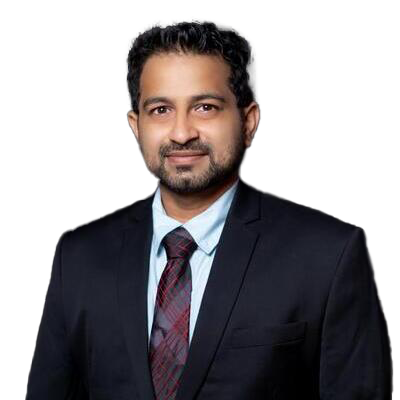
Dr. Balaji Bashyam completed his advanced Fellowship in Spine Surgery (FISS) at the Department of Spine Surgery, Christian Medical College (CMC), Vellore — one of India’s busiest and most respected tertiary spine referral centres. The CMC Vellore Spine Unit manages over 700 spine surgery cases every year, including more than 100 spinal deformity corrections annually (scoliosis and kyphosis cases). Training inside a unit of this volume exposed Dr. Balaji to the full breadth of spinal pathology — from routine disc problems to the most complex deformity and revision cases — at a scale few surgeons in India experience during fellowship.
As one of India’s highest-volume spine centres, a complete spectrum of spinal conditions, including:
Spine surgery is one of the most demanding field, as a through history is elemental to make a clinical diagnosis and this has to checked with images (Xray amd MRI) to reach treatment any failure in the steps leads to failed back syndrome. The Spine surgery outcomes are closely linked to surgeon and institutional case volume — surgeons trained in high-volume centres see a wider range of complications, anatomical variations, and difficult cases during training than those trained in lower-volume settings, which translates into better pattern recognition and decision-making in independent practice. Operating at the volume CMC Vellore’s unit handles (700+ cases annually, 100+ deformity corrections) meant Dr. Balaji built this experience during a concentrated fellowship period, rather than accumulating it gradually over many years in a lower-volume setting.
After CMC Vellore, Dr. Balaji went on to complete the AO Spine Fellowship at Schoen Klinik München Harlaching, Germany — one of Europe’s leading spine surgery institutions — where he was trained for approximately 6 weeks directly under Prof. Christoph Siepe, a leading figure in endoscopic and minimally invasive spine surgery. He then completed a further 2 weeks at the RIWO Endoscopic Spine Fellowship, St. Anna Hospital, Herne, Germany, a centre recognised globally for advanced endoscopic spine techniques. Across this fellowship, Dr. Balaji trained in both interlaminar and transforaminal endoscopic spine surgery — the two core approaches used in modern endoscopic discectomy — at centres where the surgical teams operate on 18 to 20 endoscopic spine cases per day, giving him concentrated, high-repetition exposure to these techniques within a short training window. He has since presented internationally at Spine Week, Melbourne 2023, and is a published author in spine surgery. He now practices as a Consultant Endoscopic and Minimally Invasive Spine Surgeon at MGM Healthcare and Pavithram Speciality Clinic, Chennai, with visiting consultations in Nellore, Tirupati, and Pondicherry.
Interlaminar and transforaminal endoscopic discectomy are the two main approaches in endoscopic spine surgery, differing mainly in the entry point used to access the herniated disc. The transforaminal approach enters from the side of the spine through the neural foramen (nerve exit opening). The interlaminar approach enters from the back between two vertebral laminae, making it better suited for certain central or lower lumbar (L5-S1) disc herniations where the foraminal window is narrow. Dr. Balaji Bashyam trained in both techniques during his fellowship in Germany, allowing him to select the approach best suited to each patient’s specific disc pathology rather than being limited to a single technique.
Where did Dr. Balaji Bashyam train in spine surgery? Dr. Balaji Bashyam completed his Fellowship in Spine Surgery (FISS) at Christian Medical College (CMC), Vellore, followed by the AO Spine Fellowship at Schoen Klinik München Harlaching, Germany — training directly under Prof. Christoph Siepe for approximately 6 weeks — and the RIWO Endoscopic Spine Fellowship at St. Anna Hospital, Herne, Germany, for a further 2 weeks.
Is Dr. Balaji Bashyam trained in both interlaminar and transforaminal endoscopic techniques? Yes. During his fellowship in Germany, Dr. Balaji Bashyam trained in both interlaminar and transforaminal endoscopic spine surgery, the two core approaches to endoscopic discectomy, at high-volume centres performing 18 to 20 endoscopic cases per day.
Is CMC Vellore a good place to train in spine surgery? Yes. CMC Vellore is one of India’s most prestigious tertiary referral hospitals, with a spine unit that handles a high volume and wide complexity of cases, including deformity correction, spinal infections such as tuberculosis of the spine, trauma, tumours, and revision surgery — giving trainees broad, concentrated clinical exposure.
What spine conditions is Dr. Balaji Bashyam experienced in treating? Dr. Balaji Bashyam treats herniated discs, sciatica, spinal stenosis, cervical spondylosis, scoliosis, kyphosis, vertebral compression fractures, spinal infections (including Pott’s spine and infective spondylodiscitis), and spinal tumours, using both endoscopic minimally invasive and open surgical techniques as appropriate
->Empathy
->Excellence
->Integrity
->Safety
->Continuous Improvement