Jarvis
Dr. Balaji Bashyam's AI Assistant
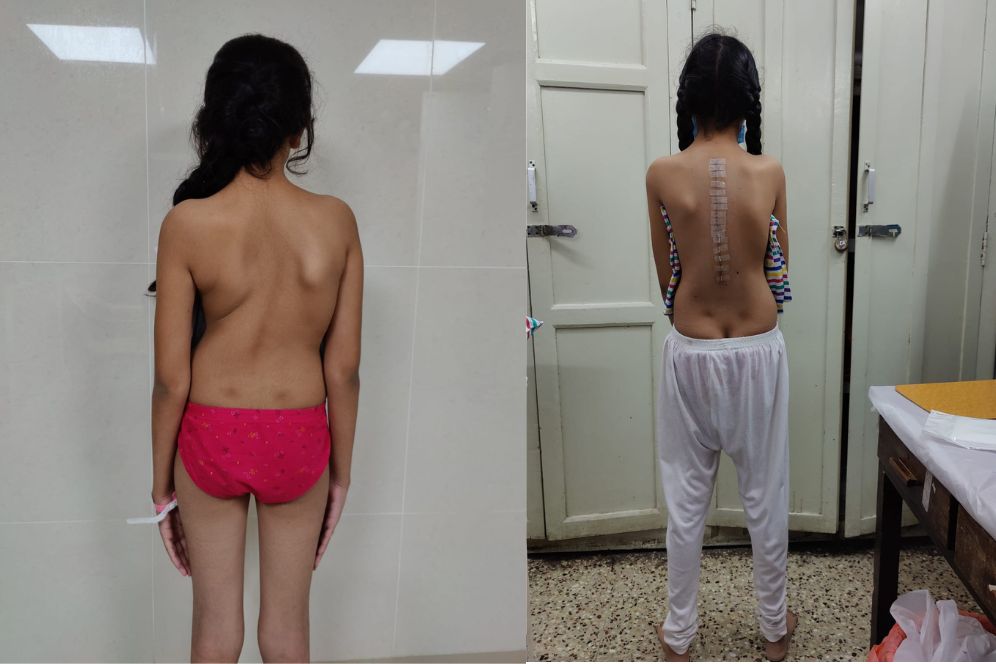
In short: Scoliosis is a sideways curve of the spine, most often noticed in children and teenagers during growth. Many curves are mild and only need monitoring; moderate curves may need a brace; larger, progressing curves may need corrective surgery. Early detection gives the most treatment options, so any suspected curve is worth a specialist assessment.
Scoliosis is an abnormal sideways curvature of the spine. Instead of running straight down the middle of the back, the spine curves to the side, sometimes in an “S” or “C” shape. The size of the curve is measured on X-ray as the Cobb angle, and it is this measurement — along with the child’s remaining growth — that guides treatment. In most children the cause is unknown (idiopathic scoliosis); less commonly it is present from birth or linked to a neuromuscular condition. For an independent, expert-reviewed overview, the international Scoliosis Research Society offers patient education on the condition and its treatment.
Scoliosis is usually painless in its early stages, which is why it is often spotted by a parent rather than felt by the child. Watch for:
If you notice any of these, it is worth having your child assessed. Spotting a curve early — before it progresses during a growth spurt — opens up the widest range of non-surgical options.
Diagnosis begins with a physical examination, including the forward-bend test, which makes any curve easier to see. This is confirmed with a standing full-length spine X-ray, on which the Cobb angle is measured. In some cases an MRI is added to look at the spinal cord and rule out underlying causes. Repeat measurements over time show whether a curve is stable or progressing.
Treatment is matched to the size of the curve and how much growing the child has left to do.
Small curves are usually monitored with periodic examinations and X-rays, especially through growth spurts. Many never progress far enough to need active treatment.
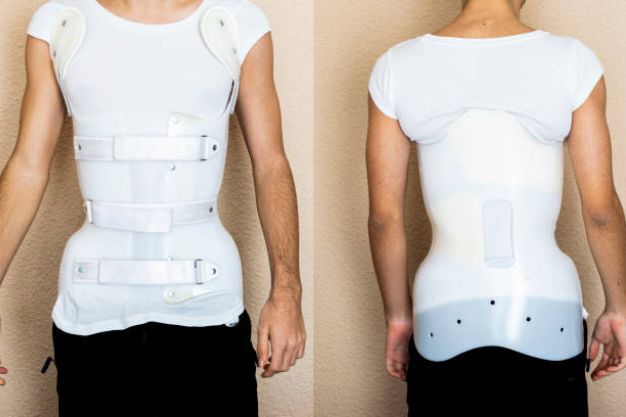
For a moderate curve in a child who is still growing, a well-fitted brace can help stop the curve from getting worse. Bracing does not usually reverse a curve, but it can prevent progression and, in many cases, avoid the need for surgery.
When a curve is large or continues to progress despite bracing, corrective surgery may be recommended. Modern deformity correction uses implants such as screws and rods to straighten and stabilise the spine, restoring balance and preventing further worsening. It is a major but well-established operation, and outcomes are closely linked to the surgeon’s experience with deformity — which is why high-volume training matters.
Yes. Adults can have a curve that was never treated in childhood, or develop degenerative scoliosis as the spine ages. In adults the focus is often on relieving pain, nerve compression, and imbalance rather than purely on the curve angle, and treatment is tailored accordingly — from physiotherapy and injections to surgery in selected cases.
Dr. Balaji Bashyam is a Consultant Spine & Deformity Surgeon in Chennai with 16 years of overall experience and 10 years dedicated to spine care. He trained at the CMC Vellore spine unit — one of India’s highest-volume deformity centres, performing over 100 deformity corrections a year — and completed advanced fellowships in Germany (AO Spine). Deformity correction is a field where surgical volume and judgement directly affect results, so this background matters. You can read more about his training and credentials here.
An early assessment can tell you whether a curve simply needs monitoring, a brace, or a specialist plan — and settles the uncertainty either way.
To book a consultation, call +91 90031 85183 or request an appointment online →.
Early signs include uneven shoulders, one shoulder blade sticking out more than the other, an uneven waist or hips, and a rib hump on one side when the child bends forward. Scoliosis is usually painless early on, so it is often noticed by a parent. Any suspected curve is worth a specialist check.
Yes, in many cases. Mild curves are simply monitored, and moderate curves in a growing child can often be managed with a brace to stop them getting worse. Surgery is generally reserved for larger or progressing curves.
It is most commonly detected during the adolescent growth spurt, roughly between ages 10 and 15, though it can appear at birth (congenital) or develop later in adulthood. Because curves can progress quickly during growth, early detection is important.
Surgery is usually considered when a curve is large or keeps progressing despite bracing, particularly once it passes a significant Cobb angle. The exact threshold depends on the child’s age, remaining growth, curve type, and symptoms, and is decided individually by the surgeon.
Modern scoliosis surgery is a well-established procedure with good outcomes in experienced hands. It uses implants such as screws and rods to straighten and stabilise the spine. As with any major surgery there are risks, which your surgeon will discuss in detail, and results are strongly linked to the surgeon’s deformity experience.
Yes. Adults with an untreated childhood curve or with age-related degenerative scoliosis can be treated. In adults, treatment usually focuses on relieving pain, nerve compression, and imbalance, ranging from physiotherapy and injections to surgery when needed.
No two spines are alike, and neither are our treatment plans. Our experienced team of specialists conducts thorough assessments to devise personalized strategies for each patient. From conservative approaches like physical therapy and bracing to advanced surgical interventions, we offer a range of options tailored to the severity and unique circumstances of the individual’s condition.
At Pavithram, innovation drives progress. We employ cutting-edge technologies and techniques to achieve optimal outcomes with minimal disruption to our patients’ lives. From minimally invasive surgeries to state-of-the-art corrective devices, our commitment to staying at the forefront of medical advancements ensures that our patients receive the best possible care.
Healing extends beyond the physical realm, which is why Pavithram Specialty Clinic emphasizes holistic care and support. Our team provides emotional guidance, nutritional counseling, and post-treatment rehabilitation to foster overall well-being. We believe in walking alongside our patients every step of the way, offering unwavering support and encouragement throughout their journey to a straighter, healthier spine.
Pavithram Specialty Clinic is more than a healthcare provider; we are partners in your path to wellness. With a unique blend of expertise, compassion, and innovation, we offer comprehensive scoliosis correction services that prioritize your individual needs and aspirations. Trust us to straighten your spine and restore your quality of life.
Book your appointments today. For appointments, contact 044 – 23740374
044 - 23740374
+91 90031 85183